

S&P 500 Investment Guide for H2 2026: Capturing Sector Rotation and Asset Allocation Opportunities
As 2026 enters the second half, global investors are once again focusing on the US stock market, particularly the S&P 500 index, a key indicator measuring the performance of large US stocks. After experiencing volatility in the first half, the S&P 500 has demonstrated strong resilience, becoming a core choice in global asset allocation. This article will conduct an in-depth analysis of S&P 500 investment opportunities in H2 2026, interpret sector rotation trends, and provide practical investment strategies and risk management solutions.
S&P 500 Index: 2026 Market Performance and Outlook
As one of the most influential stock indices globally, the S&P 500 performed excellently in H1 2026. Despite facing inflationary pressures and economic uncertainties, the index still achieved steady growth. By late August, the S&P 500 had risen by approximately 12% since the beginning of the year, outperforming most major global indices.
Analyzing the composition of the S&P 500, we can see that technology stocks remain the main driver of the index, with a weight of nearly 30%. However, as market styles rotate, traditional value sectors such as healthcare, industrials, and consumer goods are gradually gaining favor, forming a more balanced market structure.
Looking ahead to H2 2026, many market analysts predict that the S&P 500 is likely to continue its upward trend, but the growth rate may slow. The Fed's policy shift, corporate earnings growth, and geopolitical factors will become key variables affecting the index's performance.
S&P 500 Sector Rotation: Mastering Market Rhythm
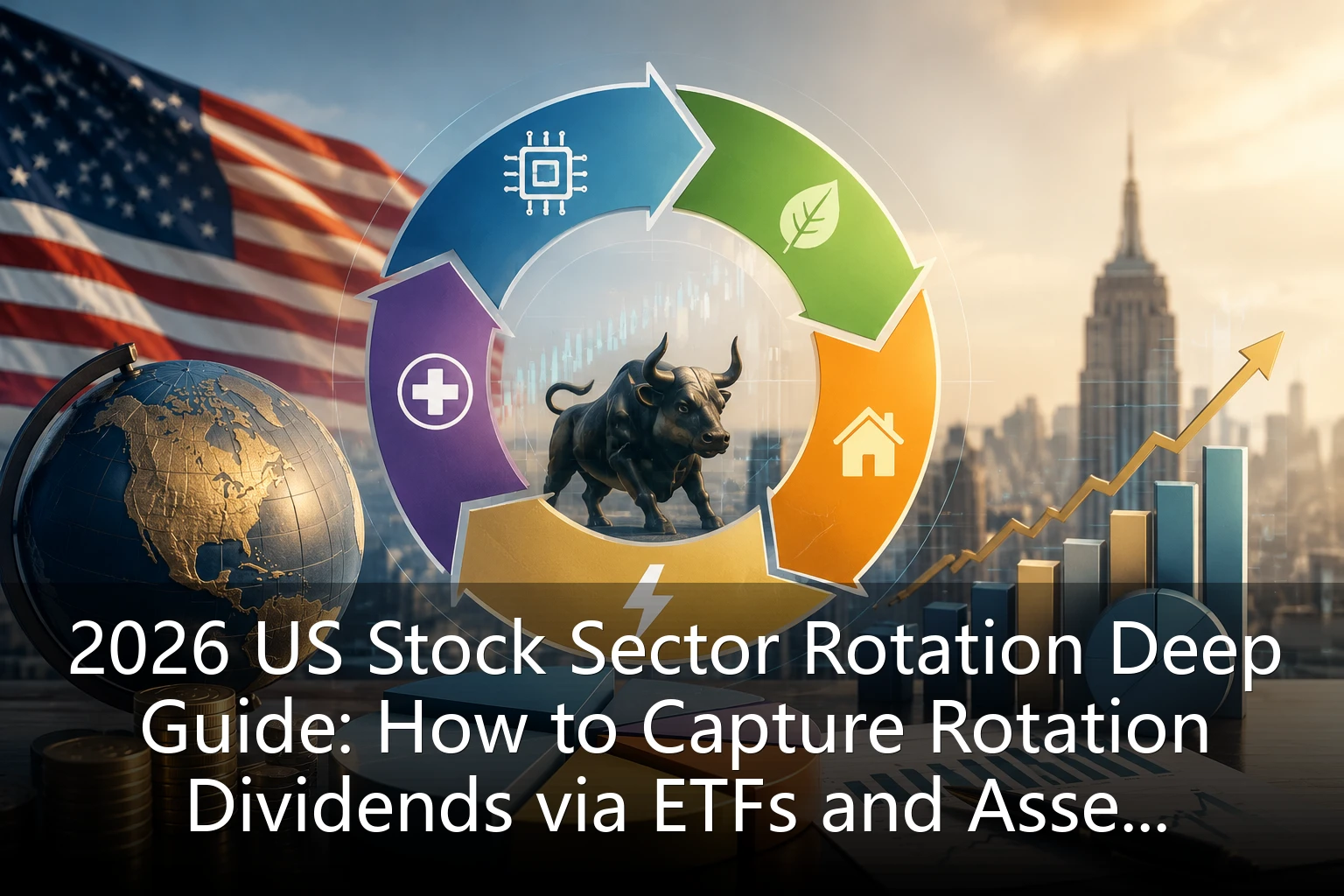
One of the most notable features of the US stock market in 2026 is the accelerated sector rotation. In the first half, technology stocks led the market rally, especially AI-related companies. However, entering the second half, the market has shown a clear style shift, with capital flowing toward value stocks.
Technology Sector: Dual Drivers of AI and Cloud Computing
The technology sector remains the core driver of the S&P 500 index. Continuous breakthroughs in AI technology and rapid growth in cloud computing demand provide strong growth momentum for tech companies. Notably, large tech giants such as Apple, Microsoft, Google, and Amazon are deepening their presence in the AI field, not only enhancing their own competitiveness but also driving the development of the entire industrial chain.
In terms of investment strategy, investors can capture this trend through technology ETFs (such as XLK, VGT) or direct investment in leading tech companies. At the same time, focus on semiconductor, software, and hardware suppliers in the AI industry chain, as these sub-sectors may generate excess returns.
Healthcare: Population Aging and Biotech Breakthroughs
The healthcare sector welcomes structural growth opportunities in 2026. The accelerating trend of global population aging, combined with innovation breakthroughs in the biotechnology field, provides broad development space for healthcare companies. Especially in areas such as gene editing, precision medicine, and chronic disease management, many S&P 500 component companies have shown strong growth potential.
Financial Sector: Beneficiary of Changing Interest Rate Environment
With the Fed's policy shift, the financial sector has become an important investment theme in H2 2026. Sub-industries such as banking, insurance, and asset management are expected to benefit from rising interest rates. Additionally, financial innovation has also brought new growth points for traditional financial institutions.
Strategies and Tools for Investing in the S&P 500
For investors, there are multiple options to participate in S&P 500 investing, from directly purchasing individual stocks to using index funds, each with its own characteristics and applicable scenarios.
ETF Investment: Efficient and Convenient S&P 500 Allocation Tools
Exchange-traded funds (ETFs) are one of the most convenient tools for investing in the S&P 500. The SPDR S&P 500 ETF Trust (SPY) and iShares Core S&P 500 ETF (IVV) are the two largest S&P 500 ETFs globally, with good liquidity and low costs, suitable for long-term investors.
In addition to traditional index ETFs, investors can also choose industry-specific ETFs such as XLK (technology), XLV (healthcare), XLF (financials), etc., to precisely capture investment opportunities in specific sectors. Additionally, factor ETFs such as quality factor (QUAL) and value factor (VLUE) provide investors with more diversified allocation options.
Options Strategies: Enhancing Returns and Risk Management
For investors with some experience, options trading can be an effective supplement to S&P 500 investing. The covered call strategy can generate additional income while holding S&P 500 ETFs or individual stocks by selling options, suitable for situations expecting moderate market gains.
The protective put strategy can provide downside protection for the portfolio, useful when market volatility increases. Additionally, strategies like straddles and strangles can help investors capitalize on market volatility opportunities.
Asset Allocation and Risk Management
When investing in the S&P 500, proper asset allocation and risk management are crucial. Investors should construct diversified portfolios based on their risk tolerance, investment objectives, and time horizon.
Core-Satellite Strategy
The core-satellite strategy is an effective method for S&P 500 allocation. Allocate most capital (70-80%) to S&P 500 index funds as the core allocation to ensure market-average returns; allocate the remaining capital (20-30%) to selected individual stocks or sector ETFs as satellite allocation to pursue excess returns.
Regular Rebalancing
Market volatility can cause asset allocation to deviate from targets. Regular rebalancing is an important means to maintain the portfolio's risk level. It is recommended to rebalance quarterly or semi-annually to adjust asset classes back to target levels.
Risk Management Tools
In addition to asset allocation, investors can utilize various risk management tools. Stop-loss orders can limit potential losses, while VIX futures or options can hedge against market panic. Additionally, diversifying investments across different industries and market capitalizations is an effective way to reduce portfolio risk.
Fed Policy and S&P 500 Investment Strategy
The Federal Reserve's monetary policy is a key factor affecting the S&P 500's performance. In 2026, as inflation gradually eases, the Fed begins to shift toward an accommodative policy, which is beneficial for the stock market.
Historical data shows that in the 6-12 months after the Fed's first rate cut, the S&P 500 index often performs well. Therefore, investors should pay attention to Fed policy signals and adjust investment strategies accordingly. In the early stages of a rate-cutting cycle, growth stocks typically outperform; as economic recovery is confirmed, value stocks may catch up.
Future Outlook and Investment Recommendations
Looking ahead to H2 2026 and 2027, the S&P 500 index is expected to continue its steady upward trend, but the growth rate may slow. Investors should focus on the following key areas:
- Progress in the commercial application of AI technology, especially the implementation of AI products by large tech companies
- The Fed's policy path, including interest rate cut timing and balance sheet adjustments
- Corporate earnings growth, especially in key sectors such as technology, healthcare, and finance
- Geopolitical risks, including changes in trade policies and international developments
Based on the above analysis, we recommend that investors adopt the following strategies:
- Adopt a core-satellite strategy, using S&P 500 index ETFs as core allocation supplemented by selected sector ETFs
- Focus on investment opportunities in sectors such as AI, healthcare, and finance
- Use options strategies to enhance returns or manage risks
- Regularly review and adjust the portfolio to maintain balanced asset allocation
- Maintain a long-term investment perspective, avoiding irrational decisions due to short-term market fluctuations
Conclusion
As one of the world's most important stock indices, the S&P 500 has shown strong resilience in 2026. By deeply understanding sector rotation trends, properly using investment tools such as ETFs and options, and implementing scientific asset allocation and risk management strategies, investors can seize long-term investment opportunities in the US stock market.
It is worth noting that investing in the S&P 500 requires investors to have a long-term perspective and risk awareness. Short-term market volatility is the norm, but historical data shows that long-term holding of the S&P 500 index often yields substantial returns. Therefore, investors should focus on fundamental changes, avoid being influenced by short-term market sentiment, and adhere to scientific investment philosophies and methods.
As the global economic landscape evolves and technological innovation accelerates, the composition and performance of the S&P 500 index will continue to change. Investors need to continuously learn and adapt to seize opportunities and achieve investment goals in this complex and changing market.