

S&P 500 Index: In-depth Analysis of the Core US Stock Asset Preferred by Global Investors
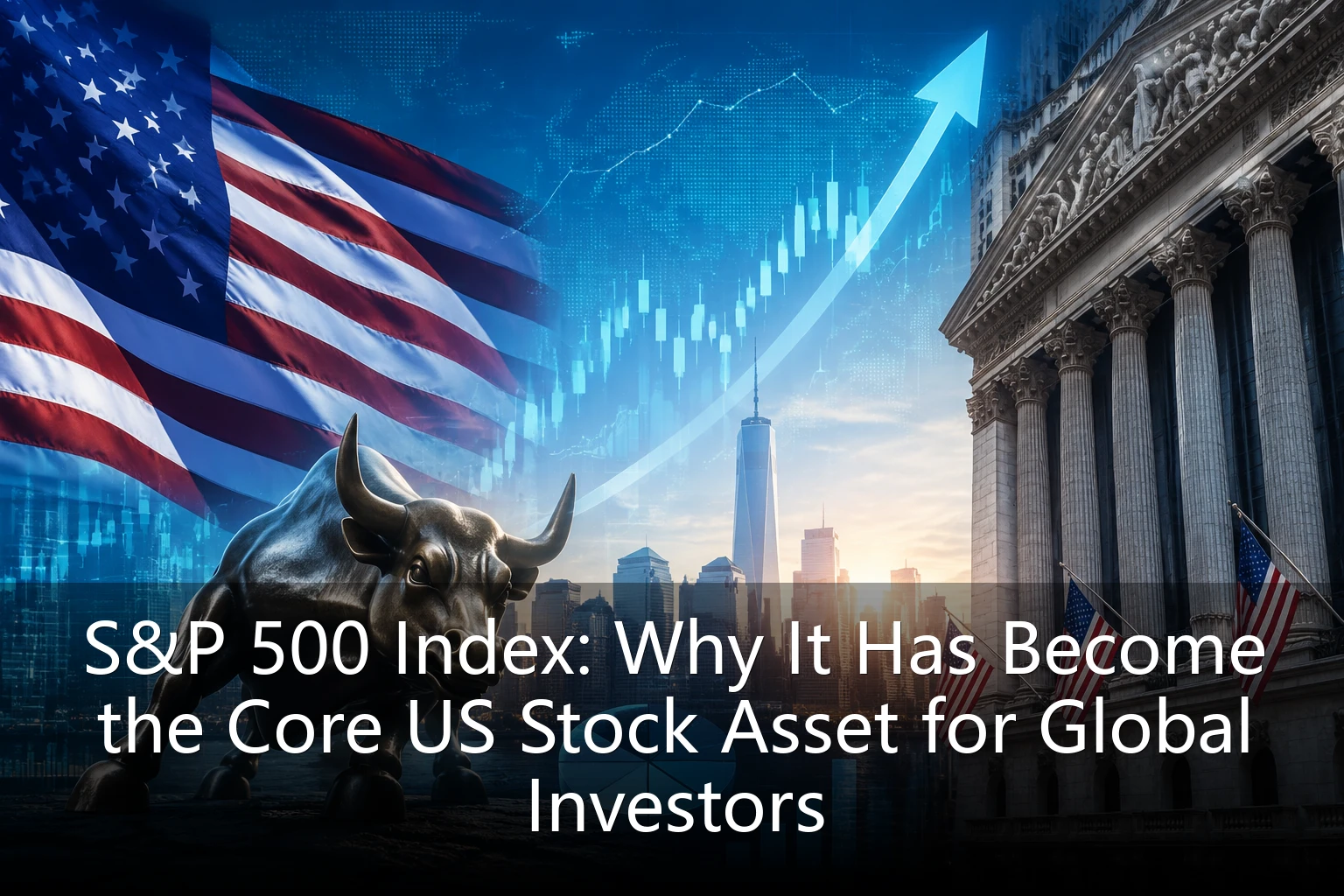
\nIn the global investment market, the US stock market has always occupied a pivotal position, and the S&P 500 index is hailed as the core US stock asset preferred by global investors. As a benchmark index measuring the performance of large-cap US stocks, the S&P 500 not only reflects the overall health of the US economy but also serves as an important indicator for global capital allocation. This article will conduct an in-depth analysis of the investment value of the S&P 500 index from multiple dimensions, helping investors understand why this index can continuously attract the attention of global capital.
\n\nS&P 500 Index: Barometer of the US Economy
\nThe S&P 500 index is compiled by S&P Dow Jones Indices and covers the 500 largest US companies by market capitalization, accounting for approximately 80% of the total US stock market value. These companies span 11 industry sectors, including information technology, financials, healthcare, consumer discretionary, industrials, utilities, real estate, materials, energy, telecommunications services, and consumer staples, forming a highly diversified investment portfolio.
\n\nUnlike the Dow Jones Industrial Average, which includes only 30 large enterprises, the 500 constituent stocks of the S&P 500 index can more comprehensively reflect the overall performance of the US stock market. Meanwhile, compared to the NASDAQ Composite, the S&P 500 not only includes technology stocks but also covers leading companies in more traditional industries, making it more representative.
\n\nHistorical Performance: A Model of Long-term Stable Growth
\nLooking at historical performance, the S&P 500 index has demonstrated an impressive long-term growth trajectory. Since its inception in 1957, the average annual return of the S&P 500 index has been approximately 10%, a performance that significantly exceeds inflation rates and other major asset classes. Even during major events such as the 2008 financial crisis and the 2020 COVID-19 pandemic, the S&P 500 index has shown strong resilience and recovery capabilities.
\n\nIt's worth noting that the long-term growth of the S&P 500 index has not been smooth but has been accompanied by periodic fluctuations. However, from a long-term perspective, these fluctuations are often offset by the overall upward trend of the market. This characteristic of "short-term volatility, long-term growth" makes the S&P 500 an ideal choice for long-term investors.
\n\nWhy Does Global Capital Continue to Favor the S&P 500?
\nThe S&P 500 index has become the core US stock asset preferred by global investors mainly based on the following core advantages:
\n\n- \n
- Global Economic Leadership: As the world's largest economy, US-listed companies possess strong international competitiveness and innovation capabilities. Many constituent stocks of the S&P 500 are industry leaders globally, with strong brand value and pricing power. \n
- High-quality Growth Driven by Innovation: The vigorous development of the US technology industry has enabled the S&P 500 index to include numerous innovative enterprises that continuously drive technological progress and business model innovation, bringing sustained value growth to investors. \n
- Comprehensive Investor Protection Mechanisms: The US has the world's most mature securities regulatory system, with strict information disclosure requirements and corporate governance standards that provide solid protection for investors. \n
- High Liquidity: The constituent stocks of the S&P 500 index are actively traded with narrow bid-ask spreads, allowing investors to easily enter and exit the market, reducing transaction costs. \n
- Diversified Industry Distribution: The balanced distribution across 11 major industries enables the S&P 500 index to withstand risks from cyclical fluctuations in a single industry. \n
Multiple Ways to Invest in the S&P 500
\nFor investors who want to invest in the S&P 500 index, there are several options available:
\n\n- \n
- ETF Investment: ETF products such as SPDR S&P 500 ETF (SPY) and iShares Core S&P 500 ETF (IVV) provide investors with low-cost, efficient investment methods. \n
- Index Funds: Passively managed funds like Vanguard S&P 500 ETF (VOO) aim to track the performance of the S&P 500 index, typically with lower management fee ratios. \n
- Futures and Options: For professional investors, S&P 500 futures and options provide tools for leveraged trading and hedging risks. \n
- Mutual Funds: Some actively managed mutual funds also use the S&P 500 as a benchmark, attempting to generate excess returns through stock selection strategies. \n
Investment Value of the S&P 500 in the Current Market Environment
\nIn 2026, the global economy is in the recovery phase of the post-pandemic era, with the US economy showing relatively stable performance. Against this backdrop, the S&P 500 index has demonstrated a series of characteristics worthy of investors' attention:
\n\nTechnology Giants Leading the Market
\nIn the S&P 500 index, technology giants such as Apple, Microsoft, Google's parent company Alphabet, Amazon, and NVIDIA occupy significant weights. These companies, with their leading positions in artificial intelligence, cloud computing, e-commerce, and other fields, continue to drive the index upward. Especially against the backdrop of rapid AI technology development, these tech giants show strong profitability and growth potential.
\n\nValuation Rationality Analysis
\nAlthough the S&P 500 index has recently reached all-time highs, from a historical valuation perspective, current valuations remain in a relatively reasonable range. Compared to historical average price-to-earnings ratios, the valuation level of the S&P 500 index is not significantly overvalued, which provides a favorable entry timing for long-term investors.
\n\nFederal Reserve Policy Impact
\nThe Federal Reserve's monetary policy has a profound impact on the S&P 500 index. In 2026, as inflation gradually cools, the market expects the Federal Reserve to enter an interest rate cut cycle. This expectation boosts investor risk appetite, which is beneficial for stock market performance. Meanwhile, an improved interest rate environment also helps increase stock valuations, especially providing support for high-growth stocks.
\n\nRisk Factors and Response Strategies
\nDespite the many advantages of the S&P 500 index, investors should still pay attention to the following risk factors:
\n\n- \n
- Geopolitical Risks: Tensions in the international situation may affect global market sentiment, thereby affecting S&P 500 performance. \n
- Economic Recession Risks: Although the current economy shows stable performance, cyclical recession risks always exist. \n
- Inflation and Interest Rate Volatility: Unexpected inflation or interest rate policy adjustments may put pressure on stock valuations. \n
- Industry Structural Risks: Technological changes or regulatory changes facing specific industries may affect the performance of related constituent stocks. \n
In response to these risks, investors can adopt the following strategies:
\n\n- \n
- Long-term Investment Perspective: Avoid being influenced by short-term market fluctuations and adhere to a long-term investment philosophy. \n
- Diversified Allocation: Include the S&P 500 as part of global asset allocation, combining with other regional markets and asset classes. \n
- Regular Rebalancing: Control risks and lock in returns by regularly adjusting asset allocation proportions. \n
- Dollar-cost Averaging Strategy: Use regular fixed-amount investment methods to average costs and reduce timing risks. \n
S&P 500 Sector Rotation Patterns
\nBy observing the historical performance of the S&P 500 index, obvious sector rotation patterns can be found. In different stages of the economic cycle, different industry sectors perform well:
\n\n- \n
- Early Economic Recovery: Cyclical sectors such as industrials, materials, and financials typically perform better. \n
- Economic Expansion Phase: Growth-oriented sectors such as technology and consumer discretionary often lead. \n
- Economic Maturity Phase: Defensive sectors such as healthcare and utilities tend to be relatively stable. \n
- Economic Recession Phase: Defensive sectors such as consumer staples and utilities usually perform better. \n
Understanding these rotation patterns helps investors optimize S&P 500 index investment strategies across different economic cycles and capture investment opportunities in different sectors.
\n\nFuture Outlook: Long-term Value of the S&P 500
\nLooking ahead, the S&P 500 index is expected to maintain its position as the core US stock asset preferred by global investors. The following factors will support the long-term performance of the S&P 500:
\n\n- \n
- Continuous Innovation in the US Economy: Innovation by US enterprises in cutting-edge fields such as artificial intelligence, biotechnology, and clean energy will continue to drive economic growth. \n
- Growth in Emerging Markets: The expansion of S&P 500 constituent companies in global emerging markets will provide new momentum for performance growth. \n
- Digital Transformation: The digital transformation of various industries will create new growth opportunities for enterprises. \n
- ESG Investment Trends: The increasing importance of environmental, social, and governance factors in investment decisions will benefit S&P 500 constituent companies that excel in ESG aspects. \n
Conclusion: Why the S&P 500 is a Core Asset for Global Investors
\nThe S&P 500 index has become the core US stock asset preferred by global investors due to its diversified composition, long-term stable growth performance, the global leadership position of the US economy, and comprehensive investor protection mechanisms. For investors seeking long-term capital appreciation, the S&P 500 index provides a convenient way to participate in US economic growth.
\n\nIn global asset allocation, the S&P 500 index can serve as a core position, providing stability and growth potential to the investment portfolio. Meanwhile, by combining with other regional markets and asset classes, investors can further optimize risk-return characteristics and achieve long-term investment goals.
\n\nOf course, investing in the S&P 500 index also requires attention to market risks and the adoption of appropriate investment strategies. In the current economic environment, the S&P 500 index still has investment value, but investors should formulate reasonable investment plans based on their own risk tolerance and investment objectives, avoiding blindly chasing highs or panic selling.
\n\nIn summary, as the core US stock asset preferred by global investors, the value of the S&P 500 index is not only reflected in its historical performance but also in the innovative vitality and growth potential of the US economy it represents. For global investors, understanding and investing in the S&P 500 means grasping the world's most dynamic economic growth engine and sharing the dividends of American corporate development.